Keep your personal or commercial Ford truck prepared for demanding work with knowledgeable dealership support from Lou Fusz Ford.
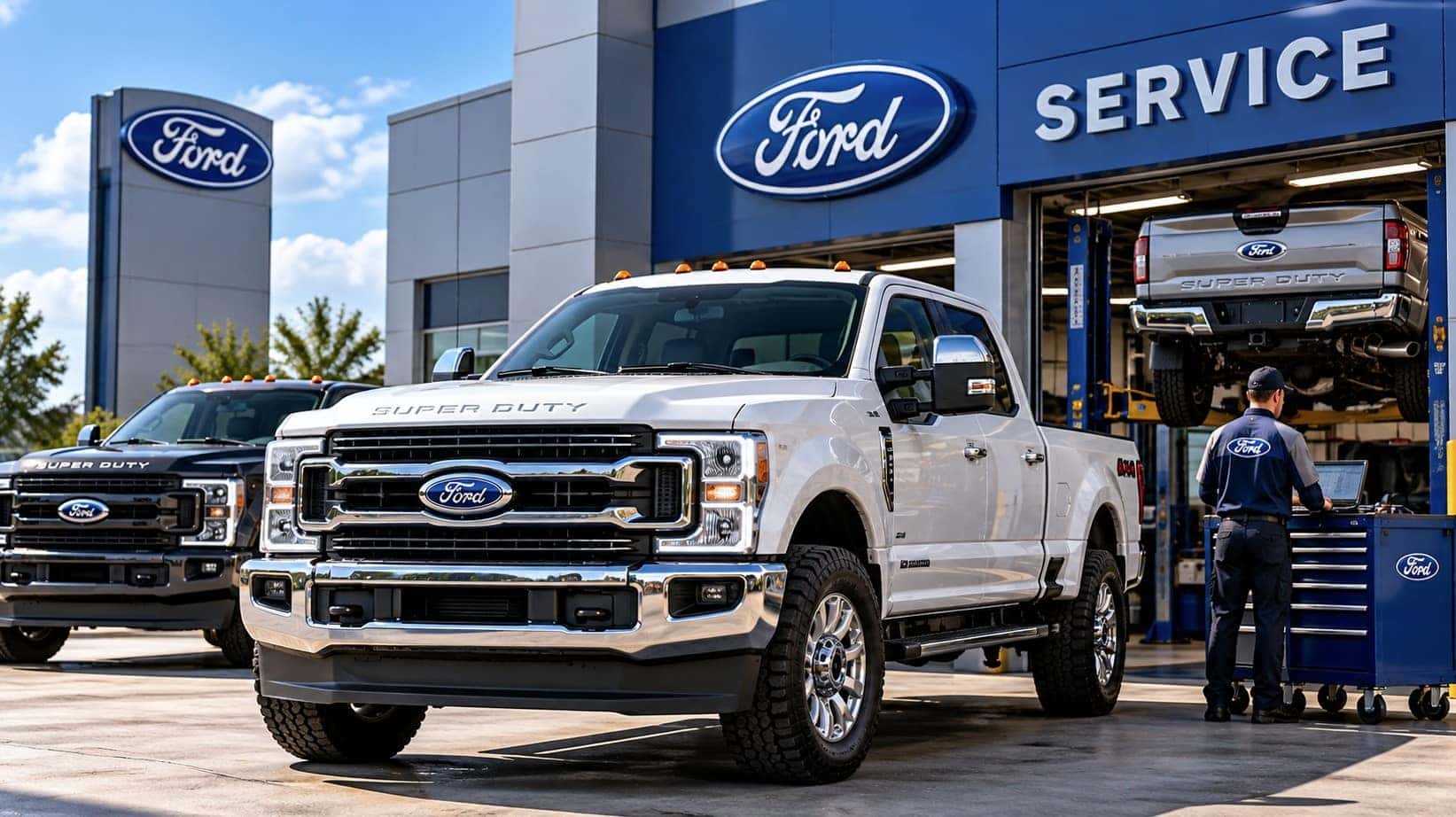
Your Super Duty may handle daily transportation, towing, jobsite duties, or regular commercial use. Lou Fusz Ford helps St. Louis-area owners plan service around each truck’s model, mileage, condition, maintenance schedule, and typical workload.
The service department supports personal owners, contractors, small businesses, and fleet managers. Whether you need scheduled maintenance or help evaluating a specific concern, the team can identify an appropriate next step based on the details you provide.
The commercial team can also help contractors, small businesses, and fleet managers discuss service needs for Super Duty trucks used in business operations.
As a dedicated Ford service center, Lou Fusz Ford can help personal owners, contractors, small businesses, and fleet managers discuss maintenance, diagnostics, and repair needs for their Super Duty trucks.
Ford F-250 and F-350 trucks are available in different gas and diesel configurations, so accurate vehicle information matters. When requesting service, share the model year, engine type, mileage, symptoms, and any warning indicators you have noticed.
Lou Fusz Ford provides essential Ford service for personal and commercial trucks. Each appointment begins with your stated needs, whether you are arranging routine maintenance or asking the team to investigate an operating concern.
Planned maintenance helps address manufacturer-recommended service needs and supports dependable truck operation. Service timing may vary based on mileage, engine configuration, operating conditions, and how frequently the truck performs demanding work.
Follow the maintenance schedule for your specific truck and keep records of completed work. Maintenance may be performed at Lou Fusz Ford or another licensed facility, depending on your preferences and the requirements of any applicable coverage, so confirm documentation needs before authorizing service.
Provide your truck’s year, model, mileage, and primary use when scheduling. These details help the service team understand whether the vehicle mainly handles personal driving, towing, jobsite work, or commercial fleet duty.
Schedule an evaluation if your truck has warning lights, unusual sounds, starting trouble, fluid leaks, braking changes, or changes in performance. Diagnostic findings help the service team establish a repair path appropriate for the truck’s condition.
Lou Fusz Ford technicians can inspect the truck, review diagnostic findings, and explain a repair path appropriate for its condition before work is authorized.
For concerns involving the rear or front drivetrain, an inspection may include drive axle components such as axle shafts, differential components, seals, and related hardware. Report unusual noises, vibration, fluid leaks, or changes in traction, especially when towing or carrying heavy loads, so the service team can determine the appropriate diagnostic next step.
For four-wheel-drive Super Duty trucks, include transfer case concerns in your service request, such as difficulty engaging four-wheel drive, unusual noises, fluid leaks, or changes in drivetrain performance. The appropriate inspection or repair depends on the truck’s configuration, symptoms, mileage, and operating conditions.
If your Super Duty is equipped with skid plates that protect the fuel tank or transfer case, mention any visible damage, loosened hardware, or contact with obstacles when scheduling service. Skid plates and the components they protect can be inspected after off-road driving or other demanding use, especially if you notice new rattles, leaks, or changes in four-wheel-drive operation.
Depending on the service request, you can ask whether a multipoint inspection is appropriate for your Super Duty. This type of inspection reviews multiple vehicle systems and can help identify maintenance items or concerns that may warrant further evaluation, with recommendations based on the truck’s condition and service needs.
A multipoint inspection may review mechanical, electrical, safety and cosmetic items, depending on the inspection format and the vehicle’s condition. The service team can explain which findings require attention and discuss recommended next steps before any work is authorized.
Explain when the problem occurs, how often it happens, and whether driving or operating conditions affect it. For example, mention whether a symptom appears during cold starts, acceleration, braking, towing, or extended driving. You can review the recommended work and next steps before authorizing applicable repairs.
If your Super Duty is covered by a new vehicle limited warranty, ask the service team whether the reported concern may qualify for warranty consideration. Coverage, exclusions, and required documentation can vary by vehicle and issue, so confirm the applicable terms before authorizing work.
Powertrain coverage may apply to certain major components, such as the engine, transmission, transfer case on applicable four-wheel-drive trucks, and drive axle components. Coverage, exclusions, duration, maintenance requirements, and documentation can vary by vehicle and applicable warranty or service contract, so ask the service team to review the terms for your Super Duty before authorizing related repairs.
If your Super Duty uses engine-exhaust braking while towing or hauling, mention any changes in its operation, engagement, or control when scheduling service. The service team can evaluate related braking, engine, or drivetrain concerns based on the truck’s configuration and reported symptoms.
If your Super Duty has tow/haul mode, mention changes in its engagement, shifting behavior, or control when scheduling service. This feature may work with engine-exhaust braking on applicable configurations, so describing what happens while towing or hauling can help the service team determine the appropriate diagnostic next step.
Lou Fusz Ford offers genuine Ford parts as part of its service and maintenance support. Ask about relevant parts when scheduling an appointment or reviewing diagnostic findings with the service team.
Lou Fusz Ford combines personal vehicle service with a dedicated focus on commercial transportation. That experience is useful for customers whose Super Duty trucks range from everyday vehicles to essential business assets.
Because we sell and service new Fords, you can discuss both current Super Duty options and ongoing maintenance or repair needs with the dealership team. If you are considering a new truck for personal, towing, or commercial use, ask about available models and the service considerations that may apply to your intended workload.
For Ford Pro buyers and fleet customers, ask about commercial parts and service for applicable work truck maintenance and repair needs.
A Super Duty used for contracting, hauling, field work, or fleet operations can have different service needs from one used primarily for personal transportation. Lou Fusz Ford’s broader commercial vehicle focus helps the service team consider the truck’s workload and operating conditions.
Business customers should provide the model, mileage, requested maintenance, reported concern, and fleet status. For a diesel truck, describe the symptoms and operating conditions clearly so the team can prepare for the appointment discussion.
Fleet managers can also explain whether multiple vehicles have upcoming maintenance needs. The service team can then discuss the requests and available scheduling options based on the vehicles involved.
Requesting service takes four straightforward steps:
You can also ask about Ford Pickup and Delivery when arranging Super Duty service. Availability, service-area coverage, and eligible appointments may vary, so the service team can explain whether this option is available for your vehicle and requested work.
5. Review the recommendations. Discuss diagnostic findings, proposed service, and applicable next steps before authorizing work.
Before your visit, remove personal belongings or work materials that could block access to an area related to the requested service. Bring maintenance records that may help explain recent work or recurring symptoms. Clear, specific information gives the service team a better starting point and keeps the conversation focused on your truck.
Lou Fusz Ford serves individual Super Duty owners, contractors, businesses, and fleet operators seeking Ford maintenance and repair support in the St. Louis market. Available services include routine maintenance, vehicle diagnostics, repairs, and access to genuine Ford parts.
Appointment needs vary based on the truck’s condition and the requested work. Submit the service form or contact the department to discuss availability and determine which vehicle details are needed before your visit.
Service can include routine maintenance, inspections, diagnostics, repairs, and genuine Ford parts for trucks such as the F-250 and F-350. The exact work depends on the model year, mileage, configuration, condition, and requested service.
Follow the maintenance schedule for your specific truck. Arrange an inspection sooner if you notice warning lights, fluid leaks, unusual noises, braking changes, starting problems, or reduced performance. The service team can evaluate the reported symptoms and recommend appropriate next steps.
You can discuss concerns involving gas or diesel Super Duty trucks with the service team. When scheduling, provide the truck’s model year, engine type, mileage, operating conditions, and symptoms so the team can understand your request.
Yes. Lou Fusz Ford supports contractors, businesses, small companies, and fleet managers with maintenance and repair needs for work vehicles. Fleet managers can provide details about multiple vehicles and discuss available scheduling options with the service team.
Cost depends on the requested service, labor, necessary parts, truck configuration, and diagnostic findings. Lou Fusz Ford can provide a more accurate estimate after reviewing the vehicle and proposed work.
Include the truck’s model, model year, mileage, engine configuration, primary use, requested maintenance, warning indicators, and symptoms. If a problem is intermittent, explain when it happens and which operating conditions appear to affect it.
Give your Ford F-250, F-350, or other Super Duty truck service based on its actual condition, configuration, and use. Request an appointment online or contact Lou Fusz Ford to discuss your maintenance, diagnostic, or repair needs today.
Transmission service is also important for a Super Duty used for towing, hauling, or frequent stop-and-go driving. Maintenance needs can vary by transmission type, mileage, workload, and operating conditions, so discuss shifting concerns, fluid leaks, or changes in performance when scheduling.
For Super Duty trucks equipped with the 6.7-liter Power Stroke® V8 Turbo Diesel engine, service discussions may include fuel delivery, emissions equipment, starting performance, and heavy-duty operating conditions. Provide the engine configuration and describe any changes in performance, warning indicators, or towing behavior so the service team can recommend an appropriate diagnostic next step.
A diesel engine may have service considerations related to fuel delivery, emissions equipment, starting performance, and heavy-duty operation.
A gas engine may have different maintenance and diagnostic considerations from a diesel configuration, making the correct engine information important when arranging service.
Additional answers for St. Louis-area Ford Super Duty owners and commercial fleet operators.
Follow the maintenance schedule for your F-250 model year and engine. Oil, filters, tires, brakes, fluids, and inspections may need attention based on mileage and use.
Your F-350 maintenance plan depends on its engine, configuration, mileage, and duty cycle. Review the owner’s manual and discuss towing, hauling, and idling with the service team.
Service needs for an F-450 depend on its specific configuration and equipment. Provide the VIN and details of any installed commercial body to confirm service eligibility.
Use the oil-life monitor and maintenance guidance for your specific model and engine. Heavy towing, prolonged idling, and severe operating conditions can affect service timing.
It can. Towing places additional demands on fluids, brakes, tires, and drivetrain components. Check the maintenance guidance applicable to your truck and operating conditions.
Extended idling can affect service planning. Share operating hours, idle time, and mileage when discussing maintenance for a diesel Super Duty.
Provide the VIN, engine type, mileage, operating hours if available, warning messages, maintenance history, and a description of when symptoms occur.
It can indicate an emissions-system condition requiring attention. Follow your owner’s manual and request diagnosis if the warning persists or drivability changes.
Note whether the light is steady or flashing and describe any performance changes. A flashing light or severe drivability problem calls for prompt assessment; avoid continued driving if unsafe.
Possible causes range from fuel and air delivery to emissions or other engine controls. Diagnostic testing is needed to identify the cause rather than replacing parts by guesswork.
Yes, describe whether the problem occurs cold, hot, or intermittently. Battery, charging, fuel, and other systems may need evaluation depending on the symptoms.
Ask about testing if cranking slows, starts become unreliable, or electrical warnings appear. Battery age, climate, and auxiliary equipment may affect performance.
Describe the exact warning, affected accessories, battery drain, and any aftermarket wiring or equipment. Photos of intermittent messages can be useful.
Yes. Auxiliary lighting, inverters, lifts, and other installed systems may add electrical loads. Tell the service team about modifications before diagnosis.
Delayed engagement, harsh shifts, slipping, vibration, or fluid leaks merit inspection. Explain whether symptoms occur under load or while towing.
Tow/haul is an operating feature rather than a separate routine service item. If it behaves unexpectedly, report the symptom for diagnosis.
Record the conditions and any warnings, especially while descending grades or towing. Ask for an evaluation of the relevant systems on your configuration.
Follow the axle-specific maintenance guidance for your truck. Leaks, unusual axle noises, heavy towing, or demanding use are reasons to discuss an inspection.
Discuss the concern with the service team and identify your truck’s 4WD configuration. Engagement issues, leaks, and unusual noises help define the diagnostic request.
Depending on the truck and findings, service may include fluid evaluation, leak inspection, and diagnosis of shifting or engagement concerns. Follow model-specific requirements.
Vibration can come from tires, wheels, driveline components, brakes, or trailer-related factors. Note speed, load, and whether it happens without the trailer.
Use your maintenance schedule and arrange earlier inspection if you tow frequently, carry heavy loads, or notice noise, pulling, vibration, or reduced braking performance.
Yes. Pad wear can differ by axle and between inner and outer pads. A complete brake inspection should assess the relevant components and rotor condition.
A soft pedal may indicate a hydraulic or other braking problem. Do not assume new pads will solve it; arrange prompt professional assessment and avoid driving if braking is unsafe.
Yes. Payload, tire pressure, alignment, routes, and driving habits can affect wear. Use the correct tire and inflation specifications for the vehicle and load.
Uneven wear may involve inflation, alignment, suspension, or other factors. Have the tires and related components inspected to identify the cause.
Rotation patterns depend on tire size, wheel configuration, and manufacturer guidance. Ask for the pattern applicable to your specific truck.
Worn or damaged suspension components can affect handling and tire wear. Report unusual movement, noises, or changes in stability for inspection.
Stop safely, turn off the engine if appropriate, and follow the owner’s manual. Do not open a hot cooling system; arrange assistance if overheating persists.
Use coolant meeting the specifications for your exact model year and engine. Do not rely on color alone to select a compatible coolant.
Yes. Identify where the fluid appears, its approximate color, and when the leak occurs. Significant leaks or warning messages may make the truck unsafe to drive.
The scope may include tires, brakes, fluids, lights, visible leaks, and other components. Ask the service team what the inspection covers for your truck.
No. An inspection identifies findings and recommendations. Review the proposed work, costs, and authorization requirements before repairs begin.
Yes. Discuss parts availability and fitment with the service team using your VIN and the specific repair or maintenance request.
Not necessarily. Engine configurations can require different fluids, filters, and components. Accurate model-year and engine information helps identify compatible parts.
Check your VIN using Ford’s official recall lookup or the NHTSA recall tool, and contact the dealership to discuss any applicable remedy.
Yes. Provide the VIN and describe the concern. Eligibility depends on the applicable warranty, vehicle history, exclusions, and diagnosis.
Coverage depends on the facts and applicable terms. Disclose modifications and ask the service team to review how they relate to the reported concern.
Fleet managers can discuss multiple units and available appointment capacity. Provide separate VINs, unit numbers, concerns, and preferred service windows.
It is an internal identifier a business assigns to a vehicle. Including it with the VIN helps the company track appointments and maintenance records.
Records help monitor completed service, recurring issues, costs, and upcoming needs. They can also support warranty and operational discussions.
Follow model-specific maintenance guidance, investigate emerging symptoms, and plan appointments around usage. No maintenance plan can eliminate every breakdown.
Ask the dealership about available scheduling capacity and whether several trucks can be booked across different days to support fleet operations.
Eligibility depends on the vehicle, location, requested work, and current availability. Ask the service team whether your specific request qualifies.
Availability and eligibility may vary by vehicle, location, and service request. Confirm the current options directly with Lou Fusz Ford.
Do not drive an unsafe vehicle. Tell the service team about the condition and ask about appropriate towing or transport arrangements.
Yes, you can discuss service needs, but confirm bay access and repair scope for the body configuration. Share dimensions and equipment details in advance.
Provide the equipment manufacturer, model, and the affected system. Upfit-related repairs may require specialized capabilities or coordination.
Ask for the diagnostic process and any applicable fees, then review the proposed repairs and estimate before authorizing the work.
Contact Lou Fusz Ford in Chesterfield, Missouri, to discuss your F-250, F-350, or other Super Duty service needs and available appointment options.


